
(UX/UI) / 2021
Lenovo and their partners had been using the partnermarketing.com platform for a number of years, utilising features like campaign builder, asset library, and sales resources. To build on this success, Lenovo wanted to create a program to motivate, reward, and secure the allegiance of its partners. The result was the Lenovo Partner Rewards Club.
Lenovo wanted to increase its revenues in the fiercely competitive laptop and high-performance workstation space. Recognising that its channel partners would be crucial to this strategy, Lenovo needed to maximise both brand loyalty and partner performance.
They wanted a programme that would incentivise partner engagement, train and motivate participants, reward loyalty and sales, and nurture the underlying relationships to boost performance.
We delivered the Lenovo Partner Rewards Club, designed to help partners generate leads, improve selling and delivery potential, and convert leads into sales.
Each partner is taken on a personalised journey, tailored to their goals, earning ‘points’ for engagement. These points can be exchanged for monetary rewards, which can either be withdrawn or reinvested in marketing and growth activities.
My work covered both the UX and UI phases of the project. The result was a fully scoped feature ready for development, which included a comprehensive scope document, an interactive prototype, and complete UI designs. During development, I provided advisory support and conducted full UAT testing before the feature was released to production.
Additionally, the project went through several iterations, including new ways to earn points, expanding the store items, and adding features to allow admins to manage and allocate points.
Lenovo works with a wide network of partners, each belonging to different tiers and supported by distinct user groups such as sales, marketing, and admin teams. One of our first challenges was ensuring that each of these audiences had a tailored experience, only seeing the content, tools, and resources relevant to their role and partnership level.
To achieve this, we began by mapping out user journeys for every audience segment, identifying which pages and functionality were critical for them to be effective. From there, we developed a comprehensive scoping document that served as the blueprint for the project.
We structured this scope using the MoSCoW framework (Must have, Should have, Could have, and Won’t have), which helped us prioritize features and align stakeholders:
Must haves defined the non-negotiables, the core tools and content required for launch, such as pricing access for sales teams or benefits visibility for partners.
Should haves captured high-value features that would improve the experience, but weren’t absolutely essential from day one.
Could haves were enhancements earmarked for future releases, providing room for innovation without blocking delivery.
Won’t haves clarified what was intentionally out of scope, reducing the risk of scope creep and keeping the project tightly focused.
This approach gave Lenovo confidence that we were building with purpose. It created transparency across teams, set realistic expectations for launch, and established a clear roadmap for future growth. By defining priorities up front, we were able to deliver a scalable solution that balanced immediate business needs with long-term flexibility.
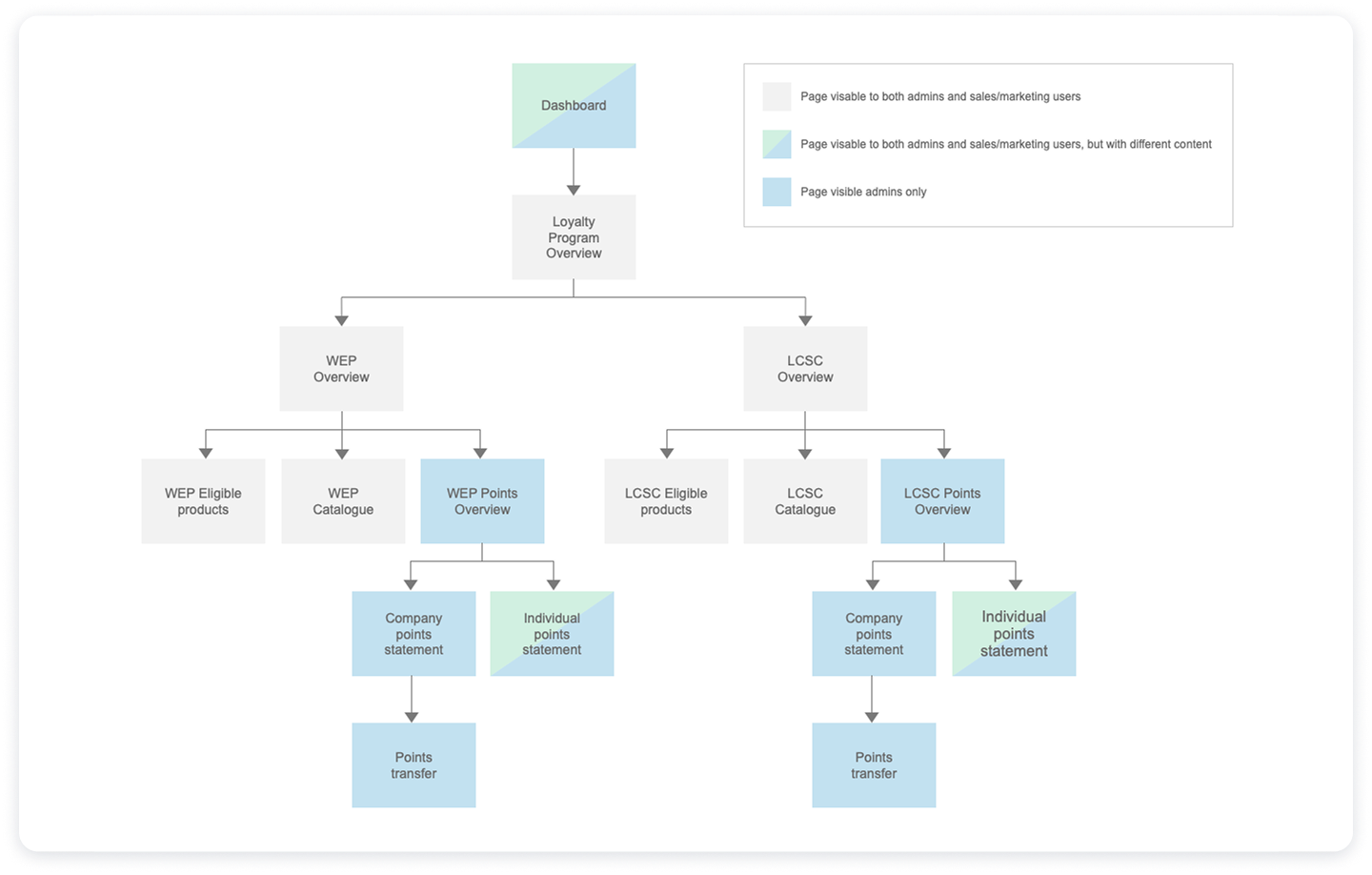
With the scope clearly defined, the next step was to bring it to life. I created an interactive prototype in Axure that mapped the end-to-end experience for each user type. This gave Lenovo the ability to step into the shoes of their partners, sales teams, and admins, and actually click through the journeys we had outlined in the scope document.
Pairing the written scope with a tangible, clickable prototype made the workflows feel real. It helped the client visualise how content and functionality would come together, and it also made it much easier for them to validate decisions, identify gaps, and confidently sign off on key features before we moved into UI design. This interactive approach not only streamlined alignment but also reduced the risk of costly changes later in the process.
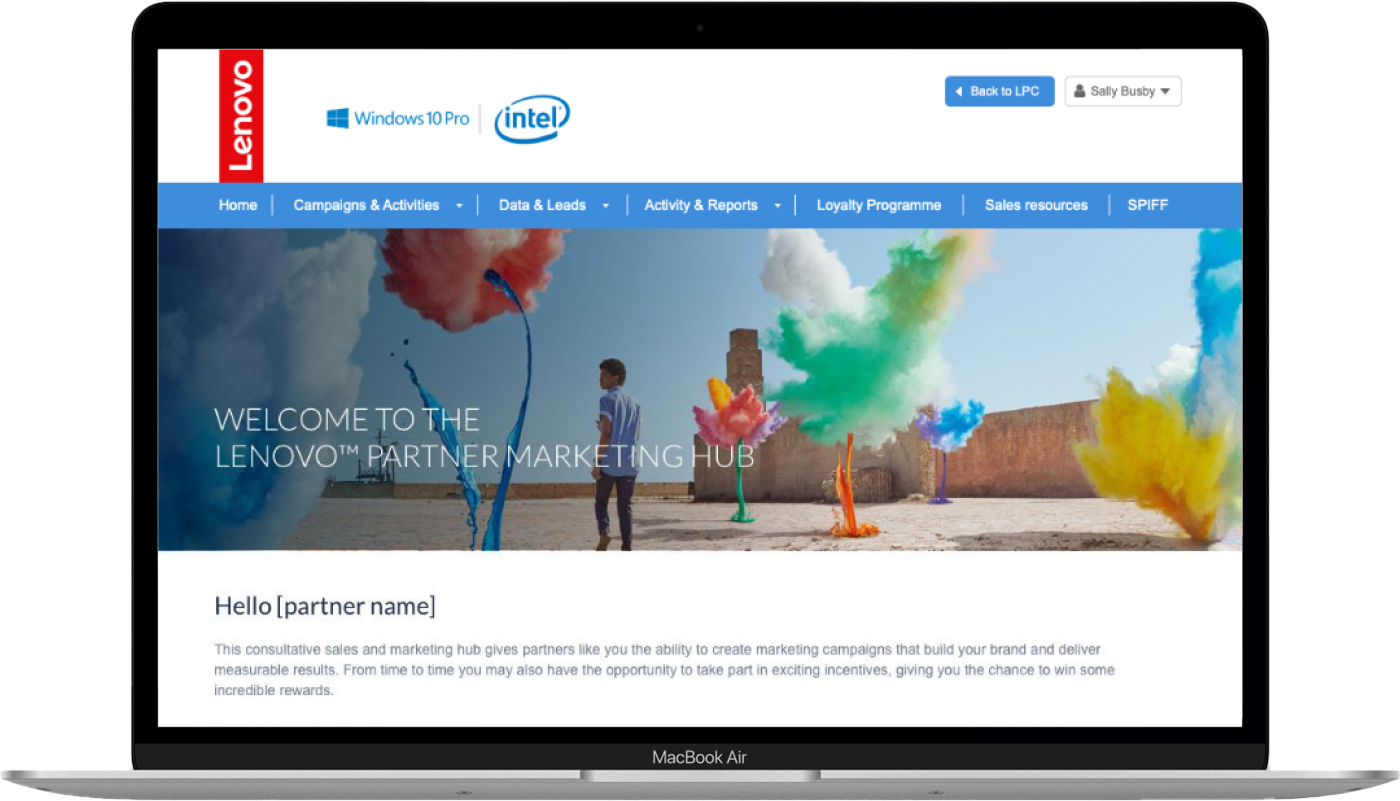
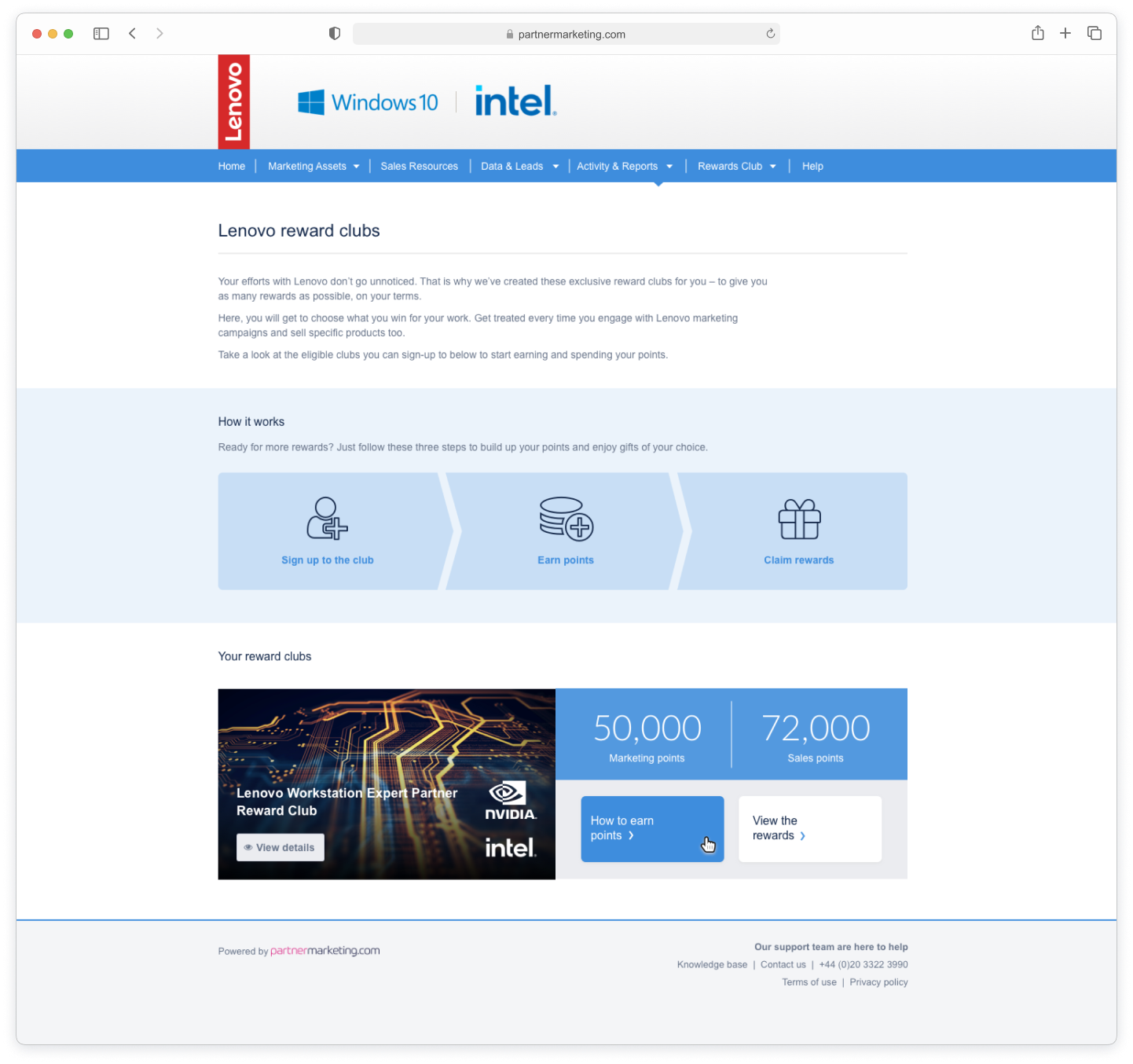
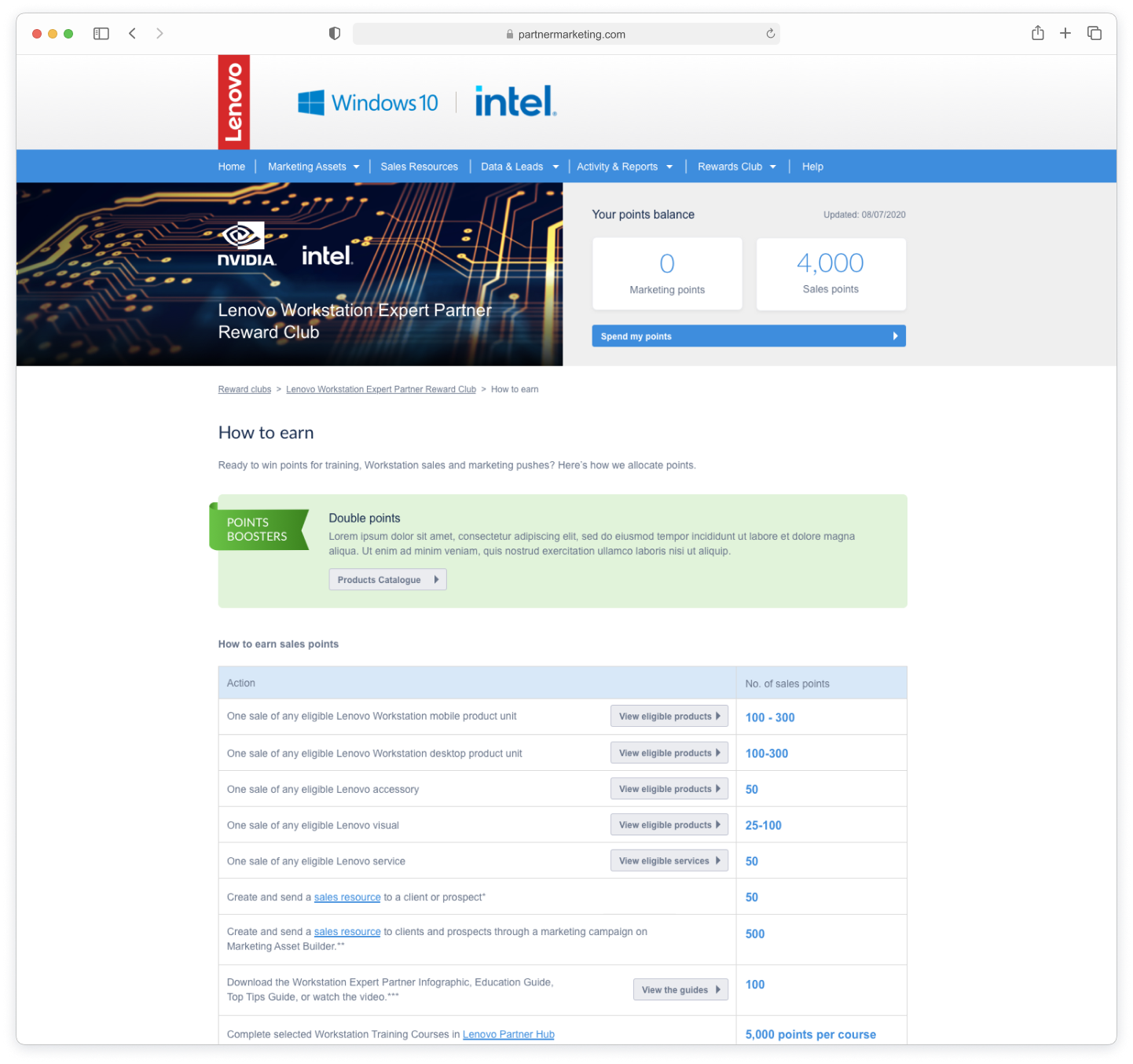
With the workflows validated, I moved into UI design, creating a full set of pages for the Rewards Club in Figma. These designs accounted for variations across user types and partner tiers, ensuring each audience saw a tailored experience that felt relevant to them.
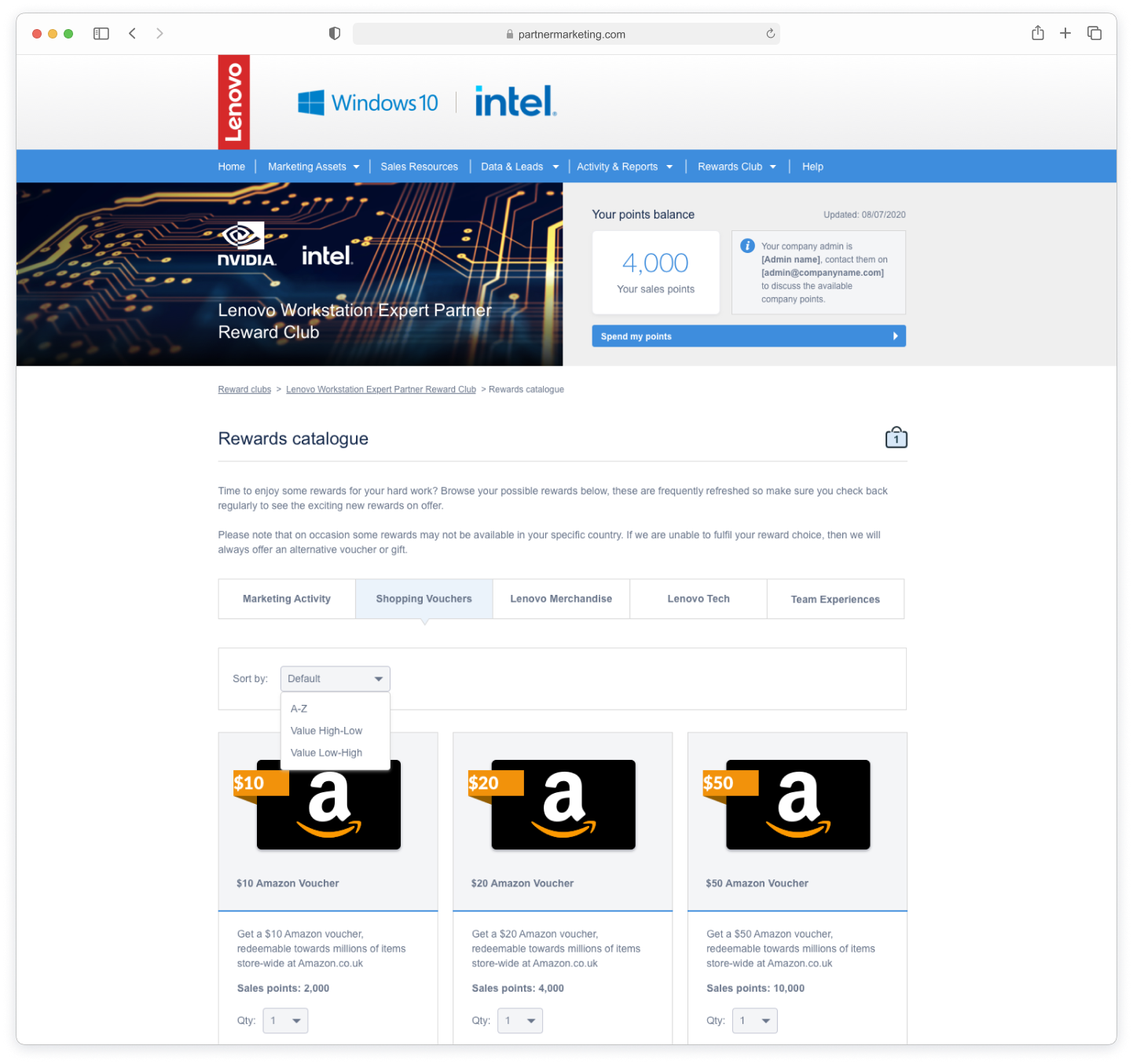
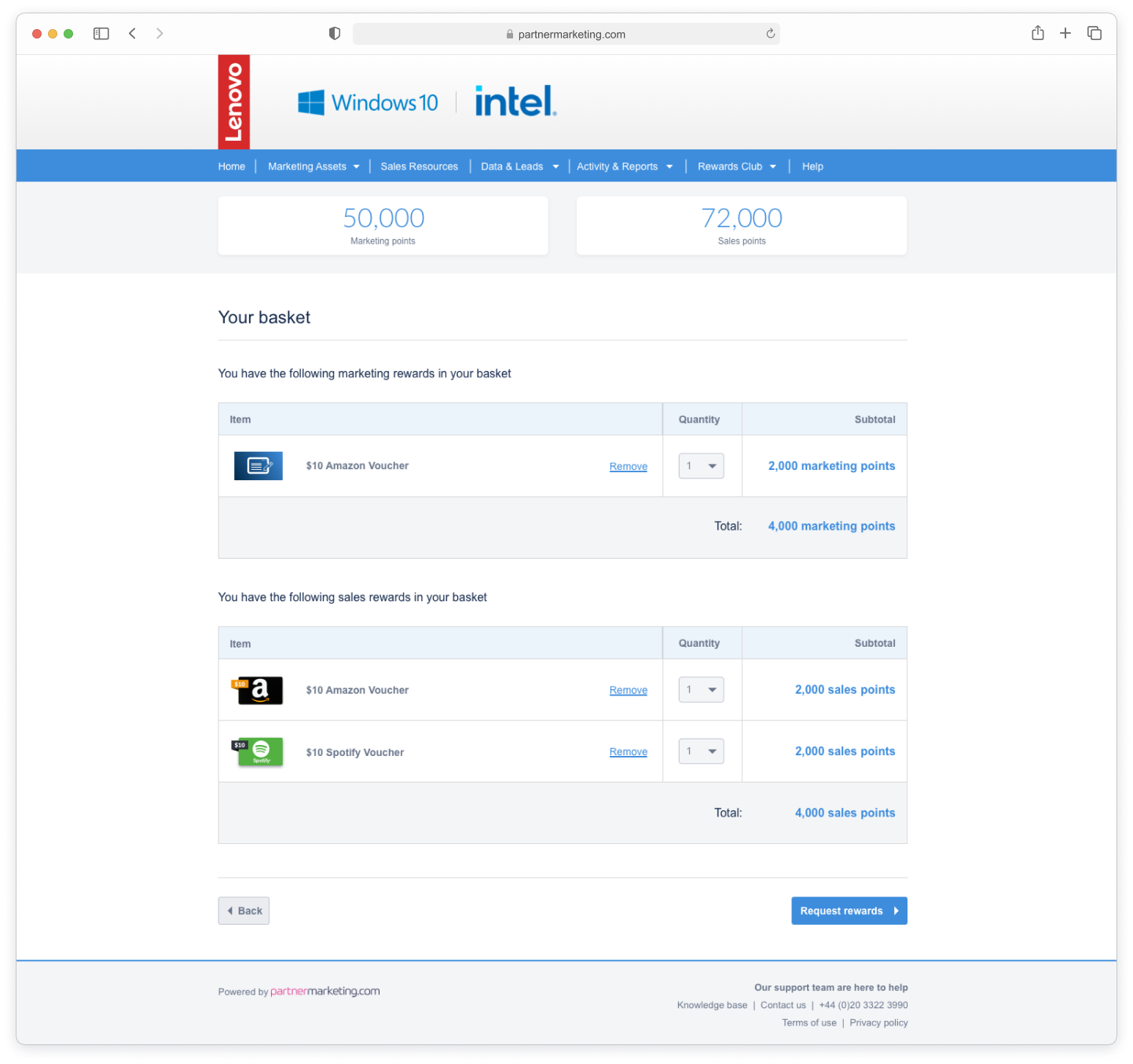
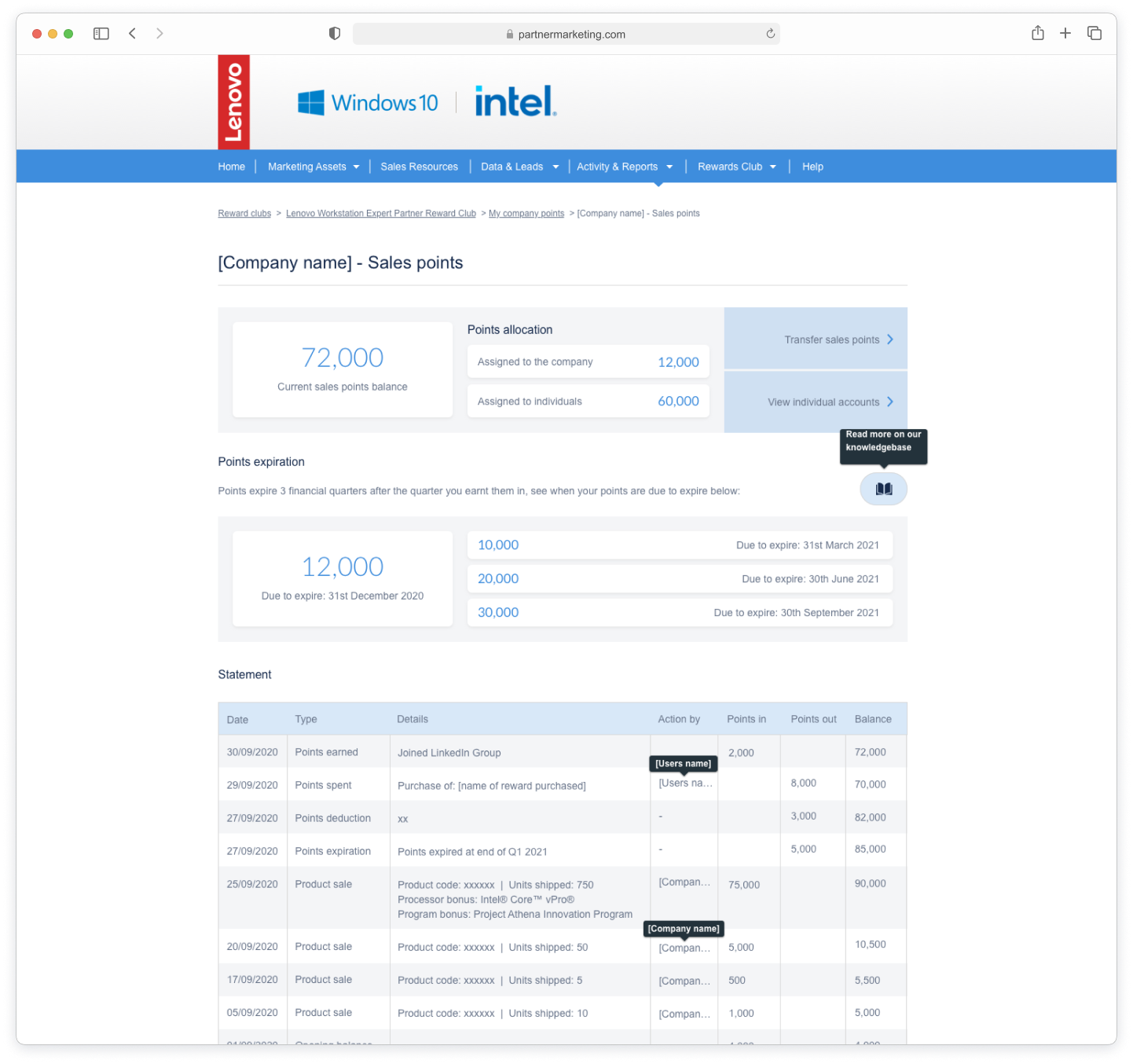
The UI covered a wide range of needs: information pages that clearly explained how the club worked and the benefits available, promotional banners to spotlight time-limited incentives and points boosters, a dynamic rewards catalogue where partners could spend their points, and detailed statement pages for admin users to manage and review transactions.
Throughout the design process, I focused on creating a consistent visual language that balanced Lenovo’s brand identity with usability best practices. Interactive components, scalable layouts, and modular design patterns were introduced to make future updates easier and more efficient. I also worked closely with stakeholders to refine visual hierarchy and content placement, ensuring the most important information was always easy to find.
To validate the designs, I ran stakeholder walkthroughs and interactive reviews in Figma, which allowed us to test the flows in context and confirm they aligned with both business requirements and user expectations. This not only surfaced areas for refinement early but also built confidence among stakeholders before handing off to development.
The result was a polished, intuitive interface that not only supported the agreed workflows but also elevated the overall experience, making the Rewards Club feel engaging, trustworthy, and easy to use.

Twogether delivered a great, data-driven, personalised, fully integrated business experience that engaged and delighted our partners.
The Club drove success to the business with a sales increase, and it also helped us increase activity across a range of Lenovo education and marketing platforms too.
The Lenovo Partner Rewards Club saw exceptional engagement, with the highest-engaged club members (41%) deliver twice their usual average sales for the period. The program helped increase Lenovo’s partner membership by 8% showcasing the impact of the rewards system on partner loyalty and performance.

74%
increase in total sales of Reward Club eligible products.
65%
average increase in sales by enrolled partners.
11%
increase in marketing activity and campaign activation by partners.
100%
of eligible partners were retained in the programme.